

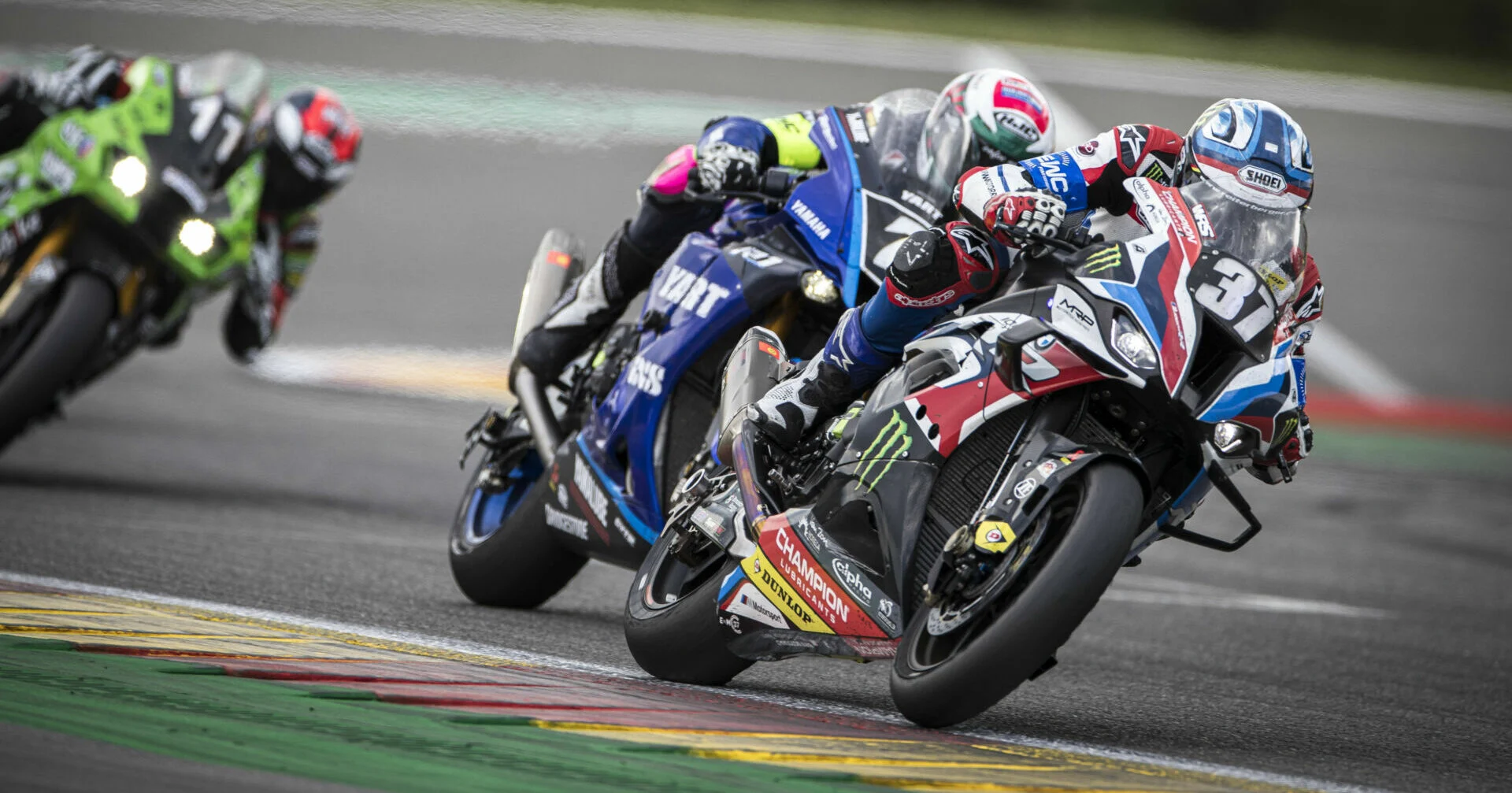
There is a type of motorsport that does not get nearly enough attention compared to Formula 1 or MotoGP. It does not have the same glamour or the same television audience. But among the people who follow it, who compete in it, and who understand what it actually demands, it is considered by many to be the most complete and most demanding form of racing that exists.
That sport is endurance racing.
At its core, endurance racing is exactly what it sounds like. Races that go on for extended periods, sometimes twelve hours, sometimes twenty-four hours, sometimes even longer. Races where raw speed is only one factor among many, where mechanical reliability matters as much as performance, where team strategy and communication are as important as rider or driver ability, and where the physical and mental demands on everyone involved are unlike anything in a sprint race format.
This blog is going to take you deep into the world of endurance racing competitions. What they are, how they work, what makes them so demanding and so compelling, the most famous events in the world, what it takes to compete, and why this form of racing deserves far more attention and respect than it typically receives outside of dedicated motorsport circles.
What Endurance Racing Actually Is
Endurance racing is any form of motorsport where the primary challenge is completing the greatest distance, or a set distance, over an extended period of time. Rather than a race that lasts thirty minutes or an hour, endurance events are measured in many hours or even days. The winner is not the fastest in a single lap or a single sprint but the team that manages speed, reliability, strategy, and human factors most effectively over the full duration.
In motorcycle endurance racing, the most common format involves teams of typically two or three riders who take turns riding the same bike. When one rider comes in, another goes out, and the bike is also serviced, refuelled, and repaired during these pit stops. The clock never stops. Every second spent in the pits is a second not spent on track, so pit stop efficiency becomes a critical competitive factor alongside outright pace.
In car-based endurance racing, similar principles apply. Teams of two to four drivers share driving duties. The cars make regular pit stops for fuel and tyres, and sometimes for repairs. Strategy around when to pit, how long each stint should be, which tyres to use at which point in the race, and how aggressively to push given the overall condition of the car shapes results as much as individual driver speed.
The demands of endurance racing are unique because they layer complexity upon complexity. You need to be fast enough to be competitive. But you also need to be consistent enough not to make mistakes over many hours. You need to manage the car or bike with enough care to keep it alive, but not so much care that you give up too much time. You need to work as a seamless team under intense pressure and fatigue. And you need to have the mental resilience to keep performing properly at three in the morning when you have been awake for twenty hours and the rain is falling and your rivals just came out of the pits on fresh tyres.
The Most Famous Endurance Races in the World
Several events have become legendary in the motorsport world, and understanding them gives the best picture of what endurance racing looks and feels like at its highest level.
The 24 Hours of Le Mans is the oldest and most famous endurance race in the world. Held annually on the Circuit de la Sarthe in France, which combines purpose-built racing circuit sections with closed public roads, it has been running since 1923 with only brief interruptions. Le Mans attracts the biggest manufacturers and the best drivers. Ferrari, Porsche, Toyota, Audi, Bentley, and Ford have all made Le Mans the centrepiece of their motorsport programmes at various points in history. The Mulsanne Straight, a section of the circuit where cars historically reached speeds approaching 400 kilometres per hour, became one of the most iconic stretches of road in all of motorsport. Winning Le Mans carries a prestige that transcends motorsport. It is one of the few sporting events whose result is genuinely known by people who do not follow motorsport at all.
The Bol d’Or is the motorcycle equivalent of Le Mans and one of the most prestigious events in two-wheeled motorsport. Also held in France, it runs for 24 hours continuously and draws factory teams from Suzuki, Yamaha, Honda, and Kawasaki as well as well-funded privateer squads. The race is the flagship event of the Endurance World Championship and has been running since 1939. It tests motorcycle engineering and rider stamina in equal measure.
The Dakar Rally is a completely different form of endurance competition that takes place over multiple days across some of the most challenging terrain on the planet. Originally running from Paris to Dakar in West Africa, it now takes place in South America and Saudi Arabia. Both motorcycles and cars compete in separate categories. Stages run daily over hundreds of kilometres of desert, rocky trails, dunes, and riverbeds. Navigation is as important as speed. Many competitors do not finish, and the Dakar has a hard-earned reputation as the most demanding rally in the world.
The Isle of Man TT, while not strictly an endurance race in the same mould as the others, deserves mention because it tests endurance of a different kind. The TT is a timed race on public roads around the Isle of Man, with each lap covering over 60 kilometres of real roads, stone walls, and villages. The mental endurance required to maintain concentration and commitment at racing speeds on roads that allow no margin for error over multiple laps, often in challenging weather, is a form of endurance that few other motorsport events demand.
The Nurburgring 24 Hours, held on the legendary Nurburgring Nordschleife in Germany, combines one of the world’s most challenging circuits with a 24-hour format. The Nordschleife is over 25 kilometres long with more than 150 corners, significant elevation changes, and conditions that can vary from sunshine to fog to rain within a single lap. It is contested by a huge field of competitors ranging from professional factory teams to amateur club racers, all sharing the same circuit simultaneously.
What Makes Endurance Racing So Demanding
To fully appreciate endurance racing you need to understand the multiple layers of challenge that stack on top of each other as a race progresses.
Physical fatigue is the obvious one. Riding or driving a racing vehicle at high speed is physically demanding even in a sprint race. Over twelve or twenty-four hours, the physical toll becomes something very different. Hands cramp. Muscles that have been tensed and used repeatedly for hours become slow to respond. Core strength, which is the foundation of everything in both car and bike racing, starts to fade. Managing physical fatigue through training, nutrition, hydration, and proper rest during stints is a critical part of endurance racing preparation that teams take as seriously as the technical preparation of the vehicle.
Mental fatigue compounds physical fatigue in ways that are harder to quantify but equally real. Maintaining concentration at racing speeds requires enormous mental effort. As hours pass, the mental cost of that effort accumulates. The ability to process information quickly, make correct braking and entry decisions consistently, communicate clearly with the team, and maintain emotional composure under pressure all degrade with mental fatigue. Experienced endurance competitors develop specific mental strategies for managing this, including techniques for resetting focus after errors and methods for staying present during the quiet periods of a stint rather than allowing the mind to drift.
Night racing adds another layer entirely. When the sun goes down, the visual cues that riders and drivers rely on during daylight hours change dramatically. Depth perception in headlight-illuminated darkness is different from full daylight visibility. Braking markers and corner entry points that are easy to identify in daylight require memorisation and feel to locate in darkness. Track temperature drops, which changes tyre behaviour. And the psychological effect of racing through darkness for hours at a time is something that rookies consistently underestimate.
Weather variation over a long race creates strategic and technical challenges that sprint racing does not face. A race that starts in dry conditions may see rain at any point. Conditions that favour a particular tyre compound in the afternoon may be completely different at midnight. Teams must make decisions about tyre choices and pit strategies based on forecasts that are never perfectly reliable, and the ability to read changing conditions and adapt strategy accordingly is a major differentiator between winning and losing teams.
The Role of the Team
Endurance racing is perhaps the most genuinely team-dependent form of motorsport. In a sprint race, a great driver can overcome a reasonable car. In endurance racing, no individual, however talented, can compensate for a team that is not functioning effectively.
The pit crew is often the most visible team component. Efficient pit stops that change riders, refuel the bike, replace tyres, and address any issues in the minimum possible time have won and lost endurance races. Teams practise pit stop procedures repeatedly to reach the kind of slick efficiency that shaves seconds off every stop. Over a 24-hour race with many pit visits, those seconds accumulate into minutes that can easily decide the result.
Race engineers and strategists are the thinking engine of an endurance team. They monitor lap times, fuel consumption, tyre degradation, competitor strategies, weather forecasts, and hundreds of data points simultaneously and use that information to make real-time strategic decisions. When to pit, how long to extend a stint, when to switch strategy in response to a safety car period, when to push and when to conserve, these decisions require both analytical capability and experience-based judgment.
Communication between the riders or drivers and the team is a skill that endurance racers develop specifically. Information needs to move quickly and accurately under conditions where both parties are under pressure. A rider reporting a mechanical issue from the bike needs to describe it clearly enough for the crew to prepare the right tools and parts before the bike arrives in the pit lane. This sounds simple but in the noise and stress of a race, clear communication is something teams work hard to develop.
Motorcycle Endurance Racing: The Endurance World Championship
The Endurance World Championship, often abbreviated as EWC, is the top level of international motorcycle endurance racing. It consists of a series of races throughout the season, with the Bol d’Or, the 8 Hours of Suzuka, and the 24 Hours Motos at Le Mans among its headline events.
Factory-supported teams from the major Japanese manufacturers and European brands contest the championship, but the EWC is notable for also having a healthy privateer class that keeps the competition large and the racing genuine. The technical regulations allow relatively free development in areas like aerodynamics and electronics while maintaining cost constraints that keep the championship accessible.
The 8 Hours of Suzuka, held at the Suzuka Circuit in Japan, is particularly significant because it brings together teams from the World Superbike Championship and the EWC in what is effectively the biggest motorcycle race of the Japanese motorsport calendar. Factory Yamaha, Honda, Kawasaki, and Suzuki teams compete in front of a passionate Japanese crowd, and the race has a cultural significance in Japan that goes beyond its sporting importance.
What It Takes to Compete
Endurance racing is accessible at levels below the factory teams and international championships. Club-level endurance events exist in most countries with active motorsport scenes and provide a genuine pathway for riders and drivers who want to experience this unique form of competition without factory budgets.
At the club level, the priority is a reliable machine, experienced teammates, and the discipline to manage a long race sensibly rather than to chase outright pace. Many club endurance racers describe their first experience of a twelve-hour or twenty-four-hour race as one of the most challenging and most rewarding things they have done in motorsport.
Physical preparation should not be underestimated even at club level. Core strength, cardiovascular fitness, and the specific muscular conditioning that comes from regular riding or driving prepare you for the demands much more effectively than natural fitness alone. Sleep management in the days before a long race and nutritional strategies during the event are things serious club competitors take seriously.
Mechanical preparation is equally important. A bike or car that is not in excellent mechanical condition before the start will not survive twenty-four hours of racing conditions. Pre-race preparation involving thorough inspection and replacement of any components showing wear is time well invested.
Why Endurance Racing Deserves More Attention
Endurance racing tells a different story from sprint racing. It is not about a single brilliant lap or a moment of tactical genius in a one-hour race. It is about sustained excellence over many hours, the accumulation of thousands of small correct decisions, the maintenance of performance and commitment when everything in your body wants to slow down, and the achievement of something genuinely difficult through teamwork.
The results of endurance races are often decided in the final hours by the teams and competitors who have managed the full race most intelligently. The drama of those final hours, when exhaustion is absolute and the gap between winning and losing can be measured in seconds after hundreds of kilometres, is motorsport at its most human and most compelling.
More people should watch it, more people should understand it, and more people who love motorsport should consider trying it. There is no other form of racing quite like it. And once it gets under your skin, it tends to stay there.